Italy · Cities
Tuscany · cradle of the Renaissance
Florence
The Duomo, the Uffizi and Michelangelo’s David: the city where the Renaissance was born.
Tuscany · cradle of the Renaissance
Florence
The Duomo, the Uffizi and Michelangelo’s David: the city where the Renaissance was born.
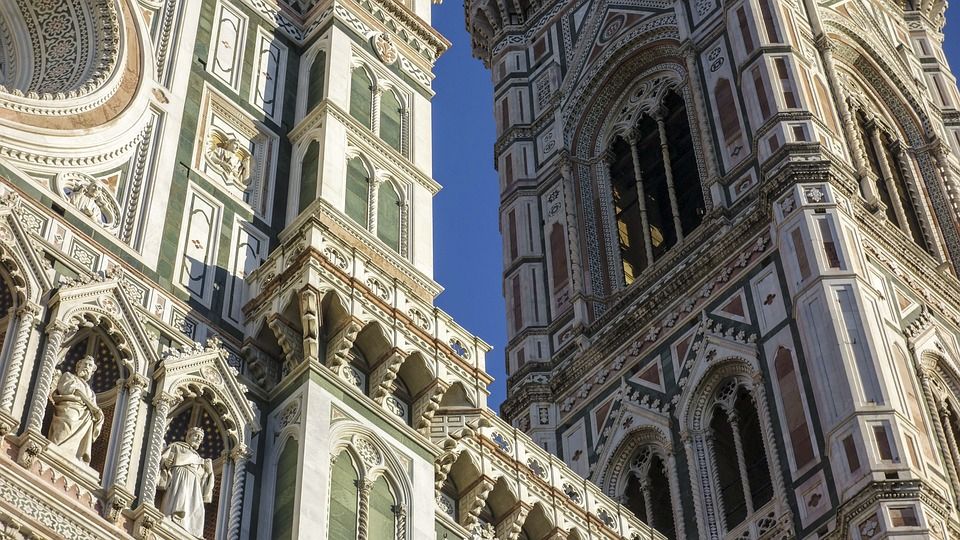
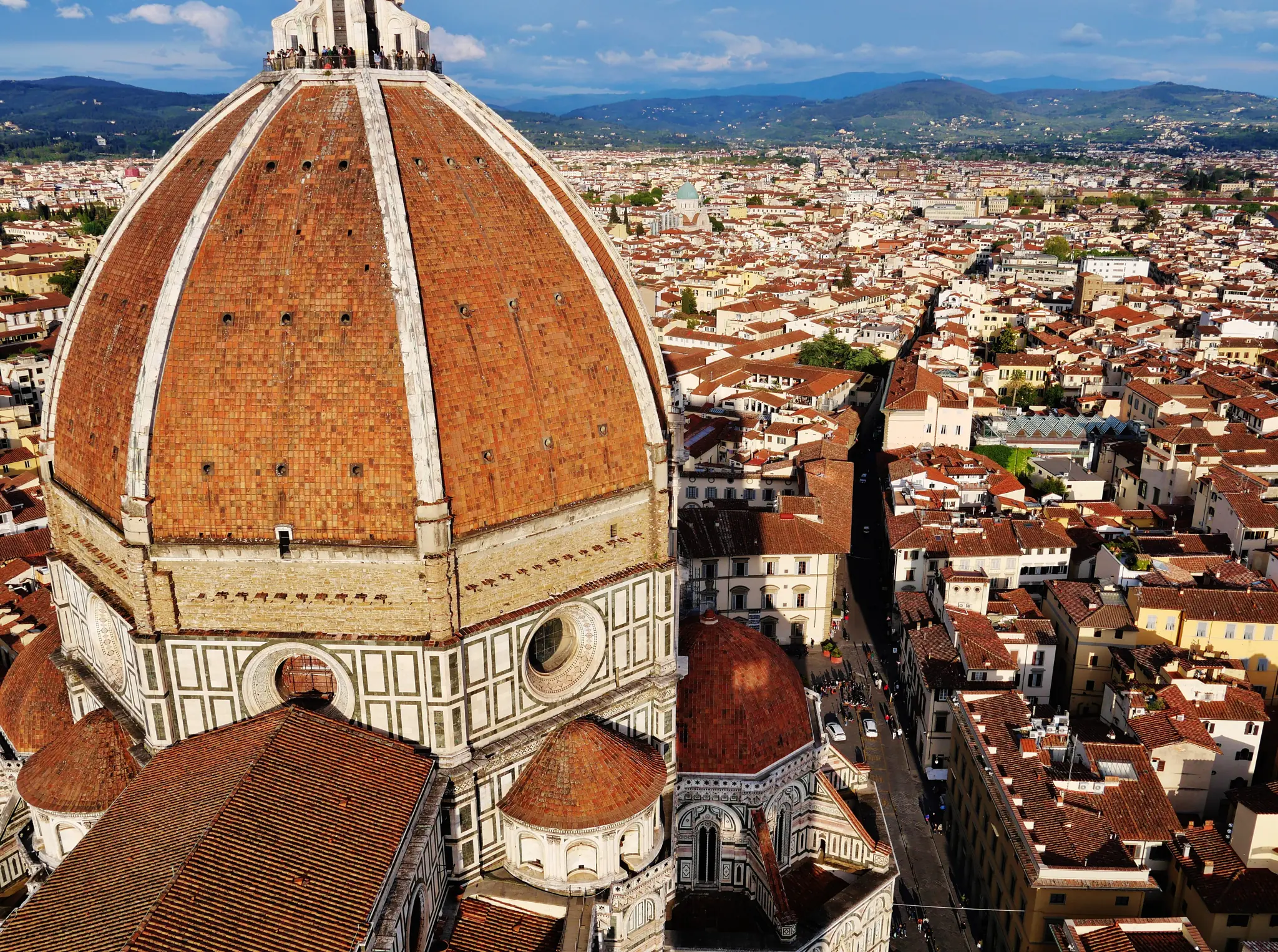
Florence was the city of the Medici and the cradle of the Renaissance; its historic centre is a UNESCO World Heritage site. At its heart stand the Duomo, crowned by Brunelleschi’s dome, Giotto’s bell tower and the Baptistery, whose bronze doors by Ghiberti were called the Gates of Paradise. The original panels are kept in the cathedral museum.
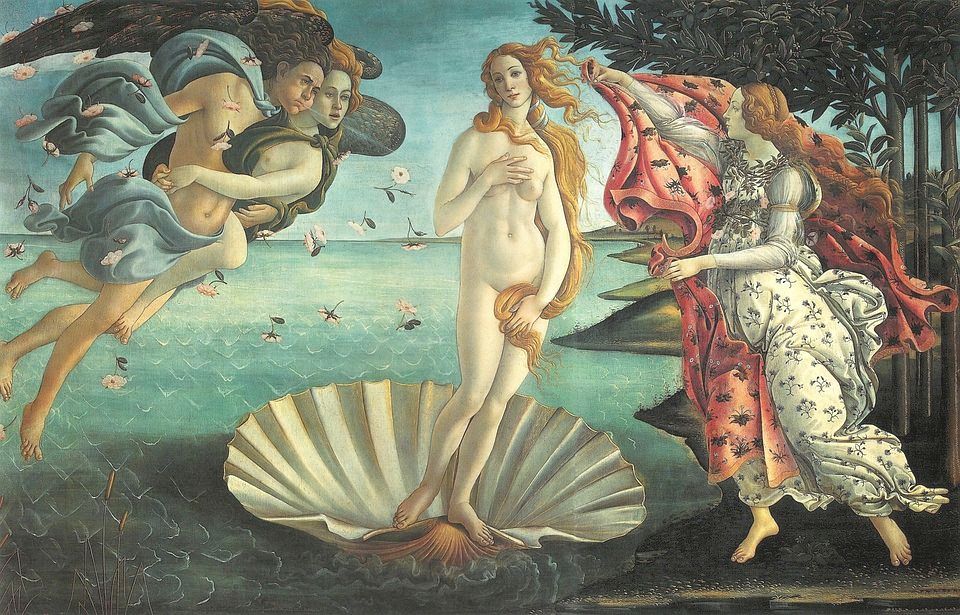
The Uffizi Gallery holds masterpieces by Botticelli, Leonardo and Raphael; the Galleria dell’Accademia keeps Michelangelo’s David. Piazza della Signoria, with Palazzo Vecchio and its loggia of statues, was the political centre of the city, and the Bargello museum is devoted to Renaissance sculpture. The Medici collections continue in Palazzo Pitti, and the Medici Chapels at San Lorenzo hold the tombs carved by Michelangelo.
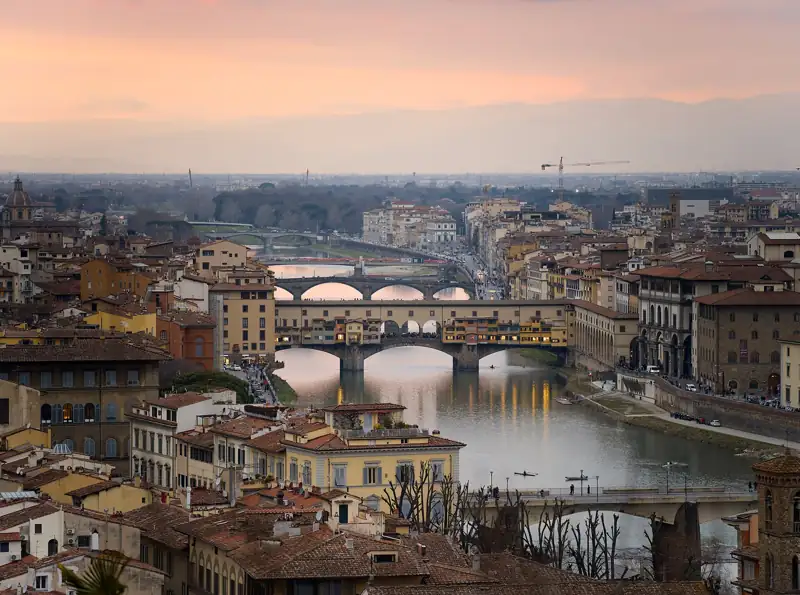
Across the Arno, over the Ponte Vecchio and its goldsmiths’ shops, lies the Oltrarno: Palazzo Pitti, the Boboli Gardens and the workshops of the artisans who still gild, bind books and restore furniture by hand. Above the river, Piazzale Michelangelo and the church of San Miniato al Monte look over the whole city.
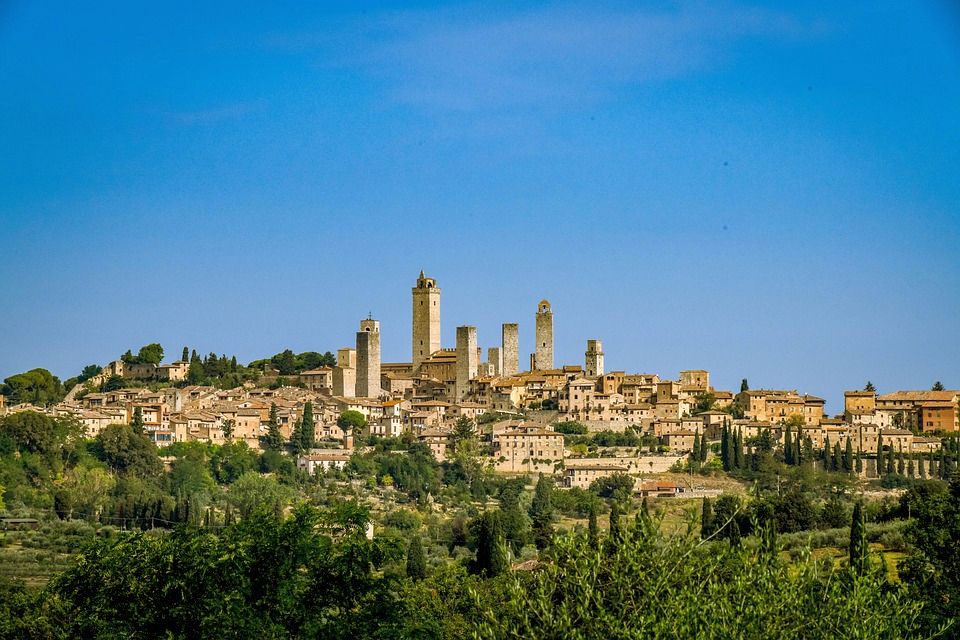
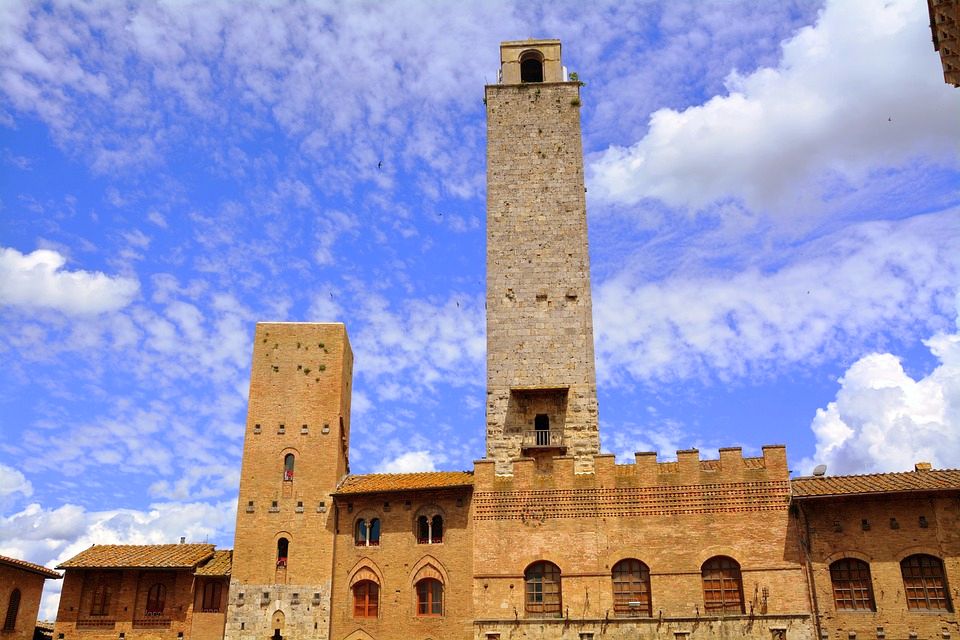
The centre is compact and best seen on foot. Spring and autumn are the ideal seasons; summer is hot and busy, and the main museums should be reserved in advance. Florence pairs naturally with Siena, San Gimignano and the Chianti hills, which lie between Florence and Siena, and with Rome or Venice by high-speed train. Evenings are for the trattorias of the Oltrarno and for Tuscan cooking, from bistecca alla fiorentina to the wines of the surrounding hills.
We book hotels on the Arno and in the historic centre, private guides, reserved entrances to the museums and days among the vineyards of Chianti.
Gallery